
How to Build a Drought-Resilient Lawn in Australia
 Australia's lawns can face some serious environmental stress. Extended dry periods, high temperatures, inconsistent rainfall and water restrictions can all make it difficult to maintain healthy turf. But a lawn doesn't have to stay perfectly green throughout a drought to be healthy. The goal of drought management is to help your lawn use available water efficiently, protect the root system and minimise unnecessary stress, so it can survive dry conditions and recover when moisture returns.
The good news is that many warm-season lawn varieties commonly grown in Australia, including Buffalo, Couch and Kikuyu, can tolerate periods of dry weather when they are properly established and managed. In this guide, we'll look at:
- How to recognise water stress in your lawn
- How soil health affects drought resilience
- How Seaweed Secrets can support turf during environmental stress
- How Iron can maintain lawn colour without deliberately pushing excessive growth
- Where Champion Fertiliser fits into a drought-resilient lawn program
- How Stimulizer can complement your soil and nutrition program
- How Nature's Soil Wetter can help when water isn't penetrating the soil properly
- Smarter mowing and watering practices during dry weather
- Long-term strategies for building a more resilient lawn
How to Tell If Your Lawn Is Under Water Stress
One of the first steps in managing drought is recognising when your lawn is beginning to experience water stress.
1. Your footprints remain visible: Walk across the lawn and look behind you. Healthy, adequately hydrated grass will generally spring back after being walked on. If the grass remains flattened, it can be a sign that the plant is experiencing water stress. This is also one of the indicators recommended by Queensland Government guidance for determining when a lawn may need irrigation.
2. The colour begins to change: A lawn under water stress may lose some of its usual green colour and develop a dull, bluish-grey or yellow appearance. However, colour changes aren't always caused by drought. Nutrient deficiencies, pests, disease and other environmental stresses can also affect lawn colour. Think of a change in colour as a reason to investigate, rather than an automatic diagnosis of drought.
3. Grass blades begin to curl or wilt: When water becomes limited, plants reduce water loss through a range of physiological responses. Grass may begin to curl, wilt or lose its normal upright appearance. If this is accompanied by dry soil and persistent footprints, your lawn is likely experiencing increasing water stress.
4. The soil becomes extremely dry or hard: Dry soil can become difficult to penetrate, particularly where the lawn is also compacted. Compaction can restrict the movement of water, air and roots through the soil profile, making it harder for rainfall or irrigation to reach the root zone.
5. Dry patches appear: If some parts of your lawn are struggling while others remain relatively healthy, don't immediately assume that the entire lawn needs more water. Dry patches can be associated with:
- Sandy or highly water-repellent soil
- Compaction
- Uneven irrigation
- Shallow soil
- High-traffic areas
- Areas exposed to more sun and heat
Identifying the cause is important because simply applying more water won't solve every type of dry patch.
Drought Resilience Starts With the Soil
One of the most important things you can do for a drought-prone lawn is improve the conditions in which its roots grow. A deeper, healthy root system gives turf access to a greater volume of soil where moisture may be available. Soil depth, structure and water infiltration therefore all play an important role in how turf handles dry periods. This is why drought management shouldn't simply be about keeping the leaves green. Healthy roots and functional soil are the foundation. Good soil management includes:
- Managing compaction
- Improving water infiltration
- Maintaining suitable soil nutrition
- Addressing water-repellent areas
- Avoiding unnecessary stress during extreme weather
- Encouraging healthy root development
| Seaweed Secrets: Supporting Turf During Environmental Stress |
Seaweed extracts are commonly used as plant biostimulants, and research has investigated their ability to help plants respond to environmental stresses such as drought and salinity. Seaweed Secrets is made from Ascophyllum nodosum, a brown seaweed that contains naturally occurring compounds and nutrients. Research on Ascophyllum nodosum extracts has found positive effects on turfgrass performance under extended irrigation intervals and salinity stress, including effects on turf quality, photosynthetic performance and root growth. However, results can vary depending on the plant, formulation, application program and growing conditions. That makes seaweed best viewed as a supportive part of a broader lawn-care program, rather than a replacement for water. |
What Seaweed Secrets can do: Used appropriately, Seaweed Secrets can help support:
It can be particularly useful when incorporated into a regular lawn-care program before and during periods of environmental stress. It won't make a lawn immune to drought, and it won't replace irrigation when turf genuinely needs water. Instead, think of it as part of the process of keeping the plant healthy enough to better handle challenging conditions. |
|---|---|---|
| Iron: Improve Lawn Colour Without Simply Pushing Growth |
When drought conditions arrive, maintaining a good-looking lawn can become difficult. Iron can be useful when the goal is to improve or maintain green colour without relying solely on nitrogen fertilisation. Iron is an essential micronutrient involved in important plant processes, including chlorophyll formation. Where iron availability is limiting, supplying iron can help correct iron deficiency and improve turf colour. |
Why use iron? Iron fertilisers can:
This makes iron particularly useful when you're trying to maintain lawn appearance without deliberately encouraging a large flush of new growth. However, iron isn't a cure for drought stress. If the underlying problem is insufficient moisture, compacted soil or water-repellent soil, that problem still needs to be addressed. Always follow the product label for application rates and timing. |
| Champion Fertiliser: Build the Lawn Before the Drought |
Fertiliser has an important role in drought resilience, but timing matters. During severe drought, when turf growth has slowed significantly and water is restricted, pushing large amounts of nutrients into the lawn isn't necessarily beneficial. The better strategy is to maintain appropriate nutrition while the lawn is actively growing, helping establish healthy turf before the most stressful conditions arrive. Champion Sustained Release Fertiliser provides controlled-release nutrition designed to feed the lawn over an extended period. Its role in a drought-resilience program is therefore less about "feeding through the drought" and more about maintaining a well-nourished lawn before periods of environmental stress. |
Why slow-release nutrition can be useful. A sustained-release fertiliser can provide:
Apply Champion according to the product directions and the growth cycle of your particular turf. In warm-season lawns, periods of active growth are generally the most appropriate time to focus on nutrition. If the lawn is severely drought-stressed or dormant, prioritise moisture management and plant protection rather than trying to force growth. |
| Stimulizer: Supporting the Soil and Root Zone |
Stimulizer is a concentrated biostimulant containing humic and fulvic acids and trace minerals. Rather than thinking of Stimulizer as a drought cure, it is better viewed as a soil and plant-support product that can complement a broader lawn-care program. Humic and fulvic substances are widely used in agricultural and horticultural systems to support soil and nutrient-management programs. However, their effects depend on the soil, plant, product formulation and conditions. |
In a drought-resilience program, Stimulizer can sit alongside good fertilisation, irrigation and soil-management practices. The goal is not to make the lawn independent of water. It's to maintain the health of the soil and root environment so the lawn is better positioned to make use of the resources available to it. Use according to the product label. |
| Nature's Soil Wetter: When Water Isn't Getting Into the Soil |
Sometimes the problem isn't simply how much water you're applying. It's whether the water is actually getting into the soil. Some soils, particularly sandy soils, can develop water repellency. Organic compounds can coat soil particles and cause water to bead, pool or run off rather than infiltrating evenly into the root zone. This can create the frustrating situation where you're watering the lawn but some areas remain noticeably dry. How to identify possible water repellency: Try applying a small amount of water to a dry area of exposed soil. If the water:
the soil may have a water-repellency or infiltration problem. Compaction can also contribute to poor infiltration, so it's important to identify the underlying issue rather than assuming every dry patch is caused by hydrophobic soil. |
Where Nature's Soil Wetter fits in: A soil wetter contains surfactants that help reduce the surface tension of water and improve its ability to penetrate and distribute through water-repellent soil. Nature's Soil Wetter can therefore be useful as part of a drought-management program where poor water infiltration or dry patches are an issue. It doesn't create water, and it doesn't replace irrigation. Instead, it helps make better use of the water that is available. That distinction is important. |
Smart Watering During Dry Weather
When watering is permitted, the objective should be to use water efficiently. Queensland Government guidance recommends watering less frequently and more deeply rather than applying small amounts frequently. This can encourage deeper rooting and reduce unnecessary water use.
Water when your lawn needs it: Don't automatically water simply because it's a particular day of the week. Look for signs of water stress and consider the condition of the soil. Always follow local water restrictions and council requirements.
Water thoroughly: Where appropriate and permitted, deeper watering encourages water to move further into the soil profile. If water is running off before it can infiltrate, try shorter watering cycles with breaks between them. This allows water to soak into the soil rather than simply flowing away.
Check your irrigation: Uneven sprinkler coverage can create very obvious dry patches. Check for:
- Blocked sprinkler heads
- Poor sprinkler overlap
- Uneven pressure
- Areas receiving excessive runoff
- Areas receiving very little water
A well-designed irrigation system can be more valuable than simply increasing watering time.
Water at an appropriate time: Early morning is generally a practical time to irrigate because conditions are usually cooler and less windy than later in the day. Most importantly, follow your local watering rules.
Mowing During Drought
Mowing is another form of stress. When turf is actively growing, it can recover relatively quickly from mowing. During drought or severe heat, recovery can be slower. That's why mowing practices should change when conditions become difficult.
Raise the mowing height: Keeping more leaf area can provide greater shade to the soil surface and reduce stress on the turf. The ideal mowing height varies between grass species and varieties, so follow the recommended height for your particular lawn rather than using one universal measurement.
Mow less frequently: If the lawn is growing slowly because of dry conditions, there may simply be less need to mow. Avoid mowing purely because it is your usual mowing day.
Follow the one-third rule: Try not to remove more than approximately one-third of the leaf height in a single mowing. Removing too much leaf at once creates additional stress.
Keep your mower blades sharp: A sharp mower blade makes a cleaner cut. Blunt blades can tear or shred leaf tissue, creating additional stress and reducing the quality of the cut.
Consider mulching: Where appropriate, returning fine grass clippings to the lawn can recycle nutrients and organic matter. However, don't leave heavy clumps of clippings sitting across a drought-stressed lawn.
Aeration Can Help Compacted Lawns
If your lawn is heavily trafficked or the soil has become compacted, aeration may help improve the movement of air and water through the soil. Compaction can restrict root growth and reduce water infiltration. Turf Queensland specifically recommends addressing compaction during dry periods because compacted surfaces can prevent applied water from entering the soil effectively.
However, timing matters. Avoid aggressively disturbing a severely heat- or drought-stressed lawn. Aerate when the turf and soil conditions are suitable for recovery and when the lawn is actively growing.
Don't Expect a Perfectly Green Lawn During Severe Drought
This is an important part of drought management. A healthy lawn doesn't necessarily have to remain bright green throughout an extended dry period. Some turf varieties can slow their growth or enter dormancy as moisture becomes limited. This is a natural survival response. During severe drought, the priority should be keeping the turf alive and protecting the root system, rather than forcing it to maintain a perfect green appearance. Turf Queensland makes the same point in its drought guidance: expectations need to change during extended dry conditions, with the focus shifting toward maintaining living turf and roots rather than a lush, green surface. When rainfall or irrigation becomes available again, many warm-season grasses can recover and return to active growth.
A Simple Drought-Resilient Lawn Routine
There isn't one product that can make a lawn drought-proof. The most effective approach is a combination of healthy soil, appropriate nutrition, good mowing practices and efficient water use.
| Before dry conditions arrive |
Build the foundation.
|
|---|---|
| During dry weather |
Reduce unnecessary stress.
|
| To support plant health |
Use products for their appropriate purpose.
|
The Bottom Line: Build Resilience Before You Need It
A drought-resilient lawn isn't created by one fertiliser, one soil conditioner or one watering session. It's built over time.
Healthy soil gives roots a better environment to grow. Appropriate nutrition supports healthy turf. Good mowing practices reduce unnecessary stress. Efficient irrigation makes better use of available water. And products such as seaweed extracts and soil wetters can complement those fundamentals when they're used for the problems they're designed to address.
Most importantly, don't try to fight drought by simply forcing your lawn to stay green at all costs. During prolonged dry conditions, a healthy lawn may slow down, lose some colour or even enter dormancy. That's not necessarily failure, it's part of how turf survives environmental stress.
The goal is to help your lawn use available water efficiently, protect its root system and recover strongly when conditions improve.
With a soil-first approach and the right products for the job, you can give your lawn a much better chance of coming through Australia's hot and dry periods in good shape.
Products in this article

CHAMPION Lawn & Fairway - Slow release granular fertiliser
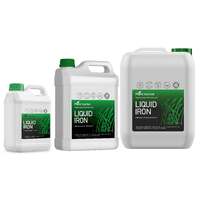
Liquid Iron Fertiliser - 7% Iron 3% Sulphur
Nature's Soil Wetter - Liquid Soil Conditioner & Wetting Agent

Nature's Soil Wetter granules - Natural mineral infused with plant-derived non-petrochemical surfactant
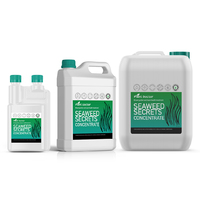
Seaweed Secrets | Concentrated Liquid Seaweed (Kelp) | Super-Boosted with Humic & Fulvic Acid

Stimulizer - Super concentrate Bio-stimulant & natural chelating agent

Leave a comment