
Humic Acid vs Fulvic Acid: Understanding Their Different Roles in Agriculture
Humic acid and fulvic acid are increasingly used as part of commercial soil, crop nutrition and plant management programs. While the two are closely related, they are not interchangeable in every application.
For commercial growers, the useful question isn't simply whether humic acid or fulvic acid is "better". It is understanding what each fraction contributes, how the products behave, and where they can fit into an existing agricultural program.
Both are derived from decomposed organic matter and belong to the broader group known as humic substances. Their properties can vary depending on their source material and extraction process, so product specifications are important when comparing commercial products.
What Are Humic and Fulvic Acids?
Humic and fulvic acids are fractions of complex organic substances formed during the decomposition and transformation of plant and microbial material. They are commonly associated with soil organic matter and can interact with minerals, nutrients and other components of the soil environment. The distinction between the two is largely related to their chemical characteristics and solubility.
- Humic acid is generally a larger and more complex fraction. It is soluble under alkaline conditions but has limited solubility at lower pH.
- Fulvic acid consists of smaller, more soluble organic molecules and remains soluble across a wider range of pH conditions.
These differences help explain why the two materials can have different practical roles in agricultural programs.
Humic Acid in Agriculture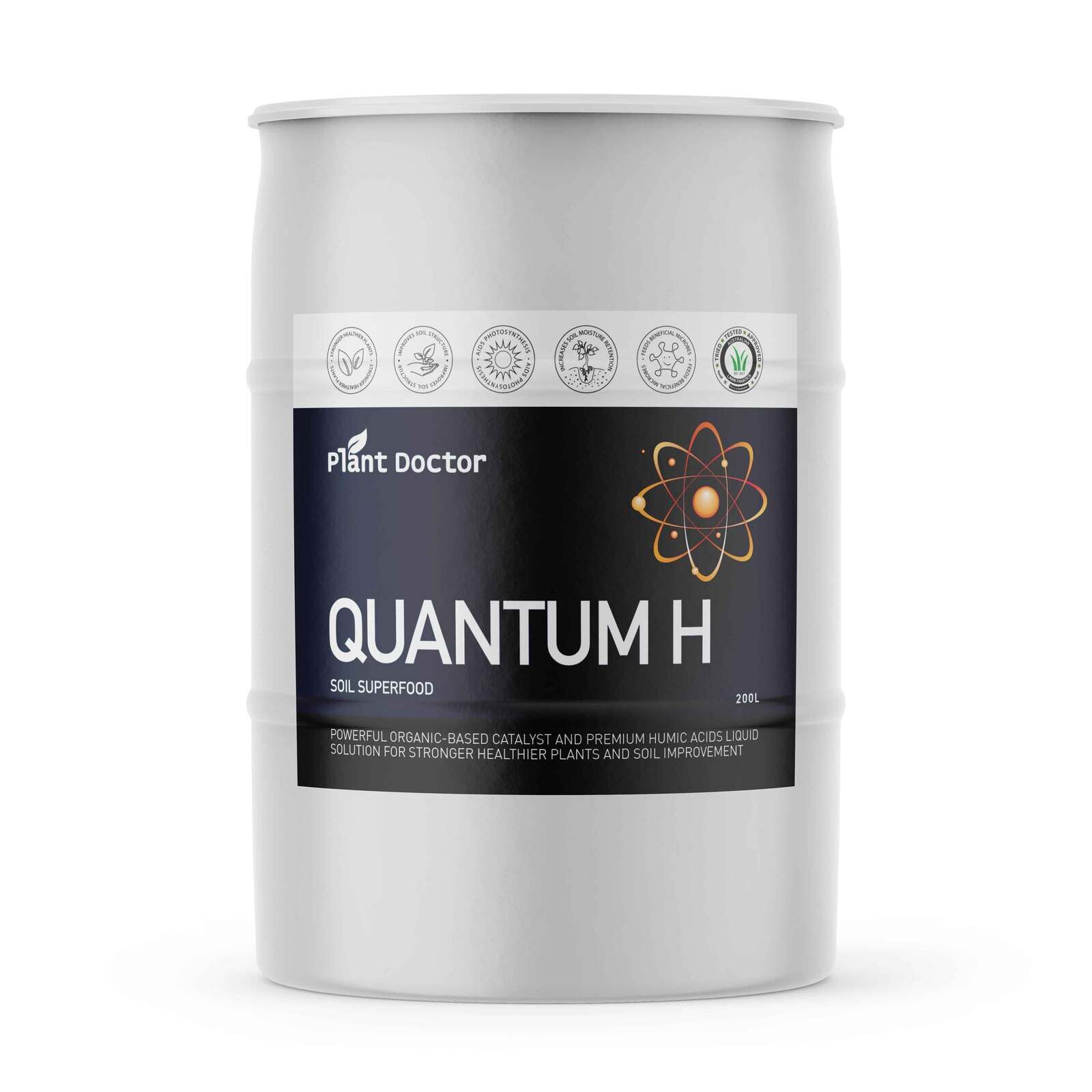
Humic acid is generally associated with soil management and the longer-term physical and chemical environment around plant roots. In agricultural systems, humic products may be incorporated into programs where growers are looking to improve soil condition, nutrient retention and the overall function of the root zone. Depending on the product and soil conditions, humic substances can interact with minerals and contribute to processes associated with nutrient availability and soil aggregation. For commercial growers, humic products may therefore be considered where the focus is on the soil itself rather than simply supplying another nutrient.
Where humic acid may fit
Humic-based products may be considered as part of programs involving:
- Soil conditioning
- Nutrient management
- Soil organic matter management
- Poor or degraded soil
- Nutrient availability
- Root-zone management
- Improving the efficiency of existing fertiliser programs
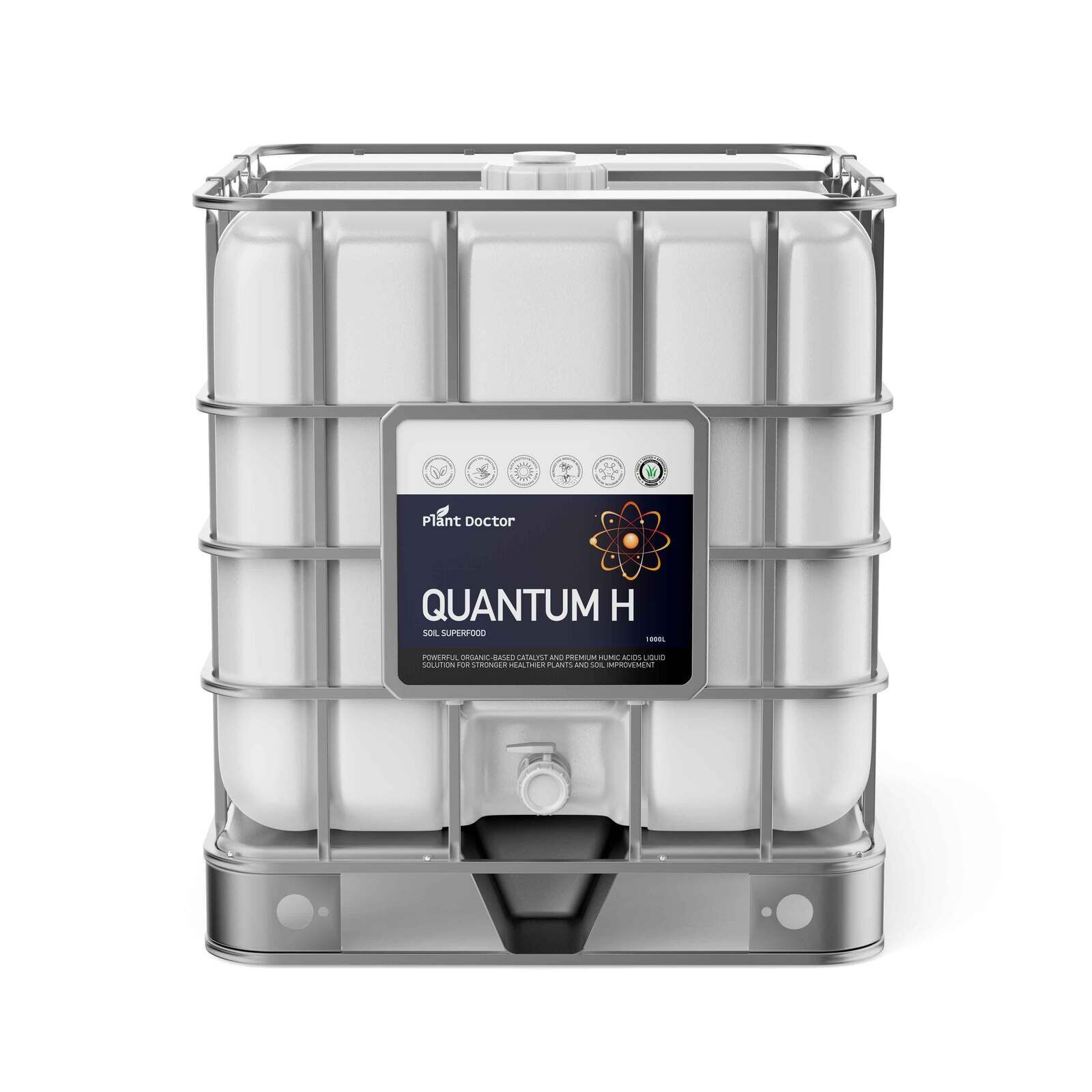
Plant Doctor's Quantum H, for example, is a concentrated liquid humic and fulvic product intended for professional agriculture, horticulture and turf applications. It is positioned primarily as a soil conditioner and is available in commercial 200L format.
Fulvic Acid in Agriculture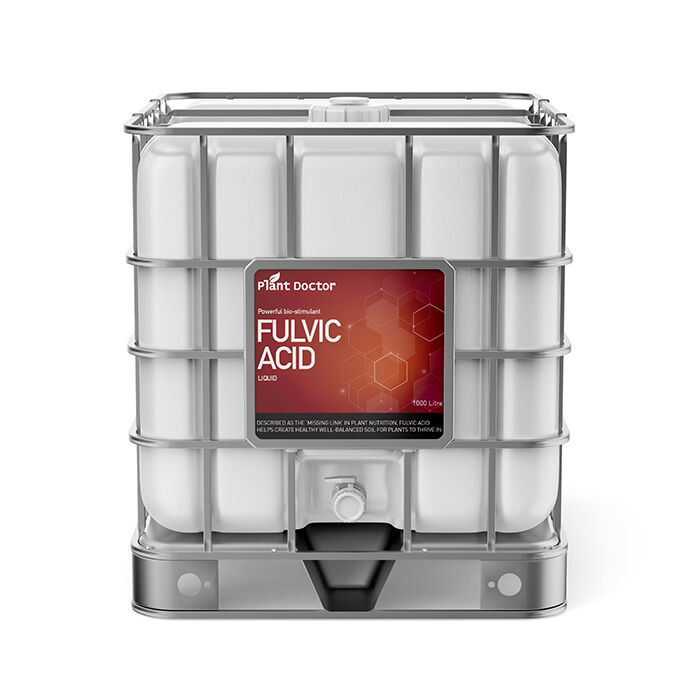
Fulvic acid has different physical and chemical characteristics from humic acid, particularly its smaller molecular size and high solubility. This makes fulvic-based products particularly interesting in nutrient management and application programs where interaction with nutrients and minerals is important. Fulvic substances can form complexes with mineral nutrients, which is one reason fulvic acid is commonly used in products designed to support nutrient availability and efficiency.
Where fulvic acid may fit
Commercial fulvic products may therefore be incorporated into:
- Liquid fertiliser programs
- Foliar applications
- Fertigation
- Trace-element programs
- Soil-applied nutrition
- Nutrient efficiency programs
- Crop nutrition programs where nutrient availability is a consideration
Plant Doctor's commercial Liquid Fulvic Acid is specifically positioned as a chelating and nutrient-efficiency product and is available in 200L and 1000L formats.
Humic Acid vs Fulvic Acid: What's the Difference?
The simplest way to think about the distinction is that humic and fulvic acids can perform different functions within a broader soil and crop management program.
| Humic Acid | Fulvic Acid | |
|---|---|---|
| General characteristic | Larger, more complex fraction | Smaller, more soluble fraction |
| Solubility | More dependent on pH | Soluble across a wider pH range |
| Common agricultural focus | Soil and root-zone management | Nutrient availability and mobility |
| Interaction with nutrients | Can contribute to nutrient retention and availability | Strong interaction with mineral nutrients |
| Typical use | Soil conditioning programs | Nutrition and nutrient-efficiency programs |
| Commercial applications | Soil management, agriculture, horticulture, turf | Fertigation, foliar applications, nutrition and soil programs |
This table is a general comparison. Actual performance depends on the raw material, extraction process, concentration, formulation, soil conditions and application method.
Does Agriculture Need Humic Acid or Fulvic Acid?
For commercial growers, there isn't a universal answer. The appropriate product depends on what the existing production system requires. If the primary focus is soil condition and longer-term root-zone management, a humic-based product may be relevant. If the focus is nutrient availability, mineral interactions or integrating an organic acid into a liquid nutrition program, fulvic acid may be more appropriate. In some programs, growers may use both. This is because the two products don't necessarily have to compete with each other. They can be used for different purposes within the same broader soil and nutrition strategy.
Can Humic and Fulvic Acid Be Used Together?
Yes, humic and fulvic fractions can be incorporated into the same broader agricultural program, provided the individual products are compatible with the application system and other inputs. Some commercial formulations already contain both. Plant Doctor's Quantum H, for example, contains humic and fulvic fractions and is positioned for soil conditioning and nutrient management in agricultural and horticultural applications. Using a combined product can be useful where a grower wants to address both soil and nutrient-management considerations rather than treating them as completely separate issues. However, combining separate products isn't automatically necessary. Product analysis, concentration, compatibility and the existing fertiliser program should all be considered before adding another input.
Humic Acid and Fulvic Acid Are Not Fertilisers in the Traditional Sense
One of the most important distinctions for commercial growers is that humic and fulvic products shouldn't automatically be viewed as replacements for a conventional fertiliser program. They are generally used as supporting inputs within a broader soil and plant nutrition strategy. A crop still requires the essential nutrients needed for growth. Humic or fulvic products don't eliminate the need for appropriate nitrogen, phosphorus, potassium or other nutrients where those nutrients are required. Instead, these products may be used alongside fertilisers to support aspects of soil function, nutrient availability or nutrient-use efficiency. This is particularly relevant when assessing products commercially. A product containing humic or fulvic acid shouldn't be judged solely by its presence on the label. The concentration, source, extraction method, formulation and intended application should also be considered.
What Should Commercial Growers Look for When Buying Humic or Fulvic Products?
When comparing products, look beyond the words "humic" and "fulvic".
| 1. Source material |
The source of the humic substances can influence the composition and characteristics of the finished product. Leonardite is one commonly used source of humic substances in agricultural products. |
| 2. Guaranteed analysis |
Look at the actual analysis rather than relying solely on marketing terminology. The concentration and form of the active components matter when comparing products from different suppliers. |
| 3. Extraction and formulation |
Extraction methods influence the characteristics of the resulting product. This is particularly relevant when comparing products marketed as humic acid, fulvic acid or combined humic and fulvic formulations. |
| 4. Compatibility |
Commercial growers should consider compatibility with fertilisers, trace elements, crop protection products and application equipment. Always follow the manufacturer's recommendations and conduct a small compatibility test when introducing a new product or tank mix. |
| 5. Application method |
Consider whether the product is intended for:
The most appropriate product depends on how it will be incorporated into the production system. |
For commercial growers, humic and fulvic products are best considered as tools within a broader soil and nutrition program, rather than standalone solutions. Humic acid is commonly associated with soil conditioning and the management of the root-zone environment, while fulvic acid's solubility and ability to interact with mineral nutrients make it particularly useful in nutrient-management applications. The two can complement each other, but they serve different functions. Plant Doctor supplies commercial humic and fulvic products for agricultural, horticultural and professional growing applications, including Quantum H and Liquid Fulvic Acid in bulk formats. The commercial range includes 200L and 1000L liquid options for operations requiring higher-volume supply.
Choosing Between Humic Acid and Fulvic Acid
The decision doesn't need to be framed as humic acid versus fulvic acid. Instead, consider the role you need the product to play.
- For soil-focused programs: a humic-based product may be appropriate where soil condition, nutrient retention and root-zone management are priorities.
- For nutrient-focused programs: fulvic acid may be useful where nutrient availability, chelation and nutrient-use efficiency are key considerations.
- For broader soil and nutrition programs: a combined humic and fulvic formulation may provide both fractions in one product.
The right choice ultimately depends on the crop, soil, production system, existing inputs and application method. For commercial agriculture, selecting the right formulation is less about choosing a universally "better" product and more about matching the characteristics of the product to the job it needs to perform.
Products in this article
Quantum H ® - 1000L
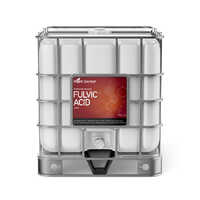
Fulvic Acid - 1000L
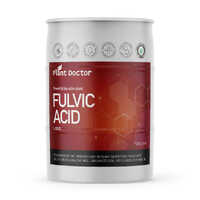
Fulvic Acid - 200L
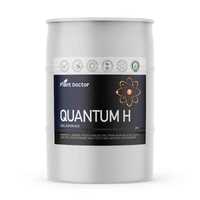
Quantum H ® - 200L

Leave a comment