
The Summer Lawn Survival Guide: How to Protect Your Lawn From Heat Stress
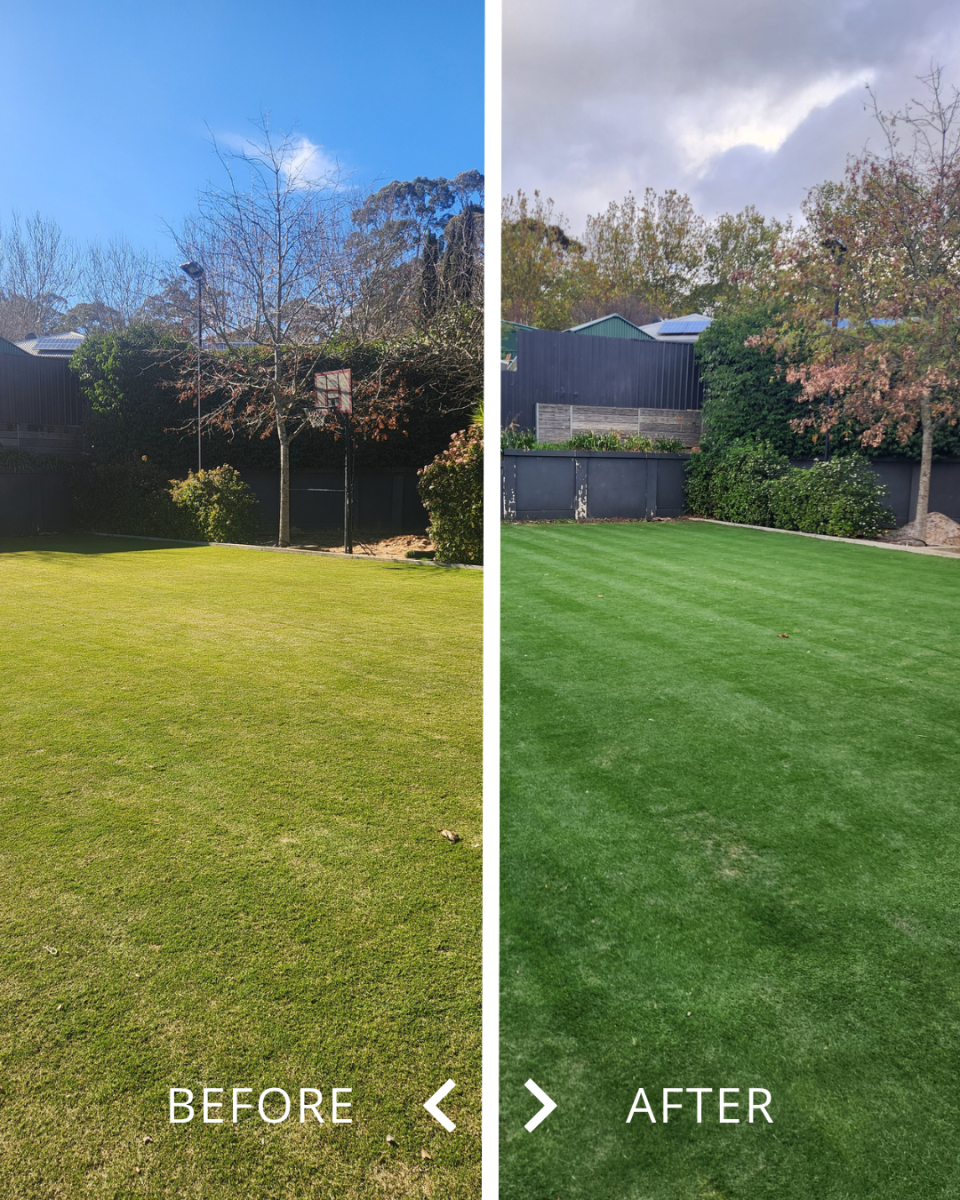
Australian summers can be tough on lawns. Between high temperatures, intense sunlight, dry spells and unpredictable rainfall, maintaining healthy, green grass can become a challenge. Even lawns that look fantastic in spring can start showing signs of stress as temperatures rise. Grass may lose its colour, develop dry patches, stop growing or become more susceptible to pests and disease.
The secret to successful summer lawn care isn't simply watering more or applying extra fertiliser. It's about understanding what your lawn needs to manage heat, maintaining soil moisture and supporting healthy root development. Whether you have buffalo, couch, kikuyu, zoysia or another common Australian lawn variety, a little preparation and the right summer lawn care routine can make a significant difference.
In this guide, we'll explain how heat stress affects your lawn and what you can do to protect it throughout the warmer months.
1. Understanding Heat Stress in Lawns
Heat stress occurs when environmental conditions place more demand on your grass than it can comfortably manage. High temperatures, intense sunlight, dry soil and hot winds can all contribute.
During hot weather, grass loses moisture through a process called transpiration. When water loss exceeds the amount the roots can absorb, the plant begins to conserve moisture and reduce its normal growth processes. This can affect the appearance and overall condition of your lawn.
|
Common signs of lawn heat stress include: |
|
|---|
It's important to recognise that not all brown grass is dead grass. Some warm-season varieties, including couch and kikuyu, can enter dormancy during extended periods of heat and drought. This is a natural survival response that allows the grass to conserve resources until conditions improve. However, prolonged moisture stress can cause genuine damage, particularly if the root zone becomes excessively dry.
The key is to manage stress before your lawn reaches the point of significant deterioration.
2. Watering Your Lawn During Summer
Watering is one of the most important parts of summer lawn care. However, how and when you water can be just as important as how much water you apply.
One of the most common mistakes homeowners make is giving their lawn frequent, shallow watering. Although this can temporarily improve the appearance of grass, it doesn't necessarily encourage a strong root system. Instead, aim to water deeply and adjust the frequency according to your soil type, grass variety, weather conditions and rainfall.
Water deeply rather than frequently: Deep watering encourages moisture to move further into the soil profile, making it available to roots below the surface. Frequent, light watering can encourage roots to remain closer to the surface, where they are more exposed to temperature fluctuations and drying conditions. For established lawns, deeper watering with sufficient time between applications is generally preferable, provided the soil allows water to penetrate effectively.
A good starting point is to check the moisture below the grass rather than relying solely on the appearance of the lawn.
If the surface looks dry but the soil underneath is still moist, additional watering may not be necessary.
Water in the early morning: Early morning is generally the best time to water your lawn during summer. Temperatures are cooler, evaporation is typically lower and the water has time to move into the soil before the hottest part of the day. Morning watering also allows grass blades to dry throughout the day, which can help reduce the conditions that encourage certain fungal diseases.
Avoid automatically watering in the evening, particularly in humid climates where grass may remain wet overnight.
Adjust watering to the weather: There is no single watering schedule that works for every Australian lawn. A lawn growing in sandy soil in full sunlight will generally have different watering requirements from one growing in heavier clay soil with afternoon shade. Consider the following factors:
| Temperature: | Hotter conditions increase moisture demand. |
| Rainfall: | Reduce irrigation when sufficient rain has replenished soil moisture. |
| Soil type: | Sandy soils generally drain faster, while clay soils retain water for longer. |
| Grass variety: | Different turf varieties have different heat and drought tolerances. |
| Sun exposure: | Lawns in full sun may dry out faster than shaded areas. |
Aays check local water restrictions before adjusting your irrigation routine.
3. Soil Moisture: The Foundation of a Healthy Summer Lawn
When it comes to summer lawn care, it's easy to focus on what's happening above the ground. However, some of the most important factors influencing your lawn's ability to cope with heat are happening underneath the surface. Healthy soil helps roots access water, oxygen and nutrients. When soil conditions are poor, even a well-watered lawn can struggle.
For example, compacted soil can restrict water movement and root development. Sandy soils may drain too quickly to maintain consistent moisture, while water-repellent soils can prevent irrigation from reaching the root zone evenly. This is why soil management should be an important part of your summer lawn care routine.
How to check your soil moisture: Rather than judging moisture levels by looking at your grass, check what's happening beneath the surface. Try these simple steps:
- Push a screwdriver or garden probe into the soil to assess how easily it penetrates.
- Dig a small section of soil to inspect moisture below the surface.
- Check whether water is soaking in evenly or running off.
- Look for areas that consistently dry out faster than the rest of your lawn.
If the soil is dry several centimetres below the surface, your lawn may need a deeper watering. If some areas remain dry despite regular irrigation, investigate whether compaction or soil water repellency is preventing water from reaching the roots.
Why soil condition matters during summer: A lawn with a healthy root environment is better positioned to access available moisture and nutrients. Improving soil condition can help address some of the underlying issues that make summer lawn care difficult. Depending on your soil, this may involve aeration, organic matter, appropriate soil amendments and the use of a quality soil wetting agent.
Remember, improving soil moisture management isn't about keeping your lawn constantly wet. It's about making the most of the water available.
4. Can Soil Wetting Agents Help Your Lawn Survive Summer?
Soil wetting agents are particularly useful for lawns that struggle with water penetration and uneven moisture distribution. Over time, some soils, especially sandy soils, can develop water-repellent properties. This is often referred to as hydrophobic soil. When this happens, water may bead on the surface, run off or move through certain sections of the soil without adequately wetting the surrounding root zone. The result is a lawn that can develop dry patches even when you're watering regularly.
How do soil wetting agents work? Soil wetting agents help water spread and penetrate more evenly through water-repellent soil. They work by reducing the surface tension of water, helping it interact more effectively with soil particles and allowing moisture to move into areas that may otherwise be difficult to wet. This can improve the efficiency of your irrigation and help address inconsistent soil moisture.
When should you apply a soil wetter? The best time to start using a soil wetting agent is before your lawn begins showing significant signs of moisture stress. Applying one as part of your early summer preparation can help address water penetration issues before extended periods of heat arrive. However, wetting agents can also be useful when you notice:
- Water pooling on the soil surface.
- Irrigation running off rather than soaking in.
- Persistent dry patches.
- Soil that appears dry despite regular watering.
- Uneven moisture distribution across the lawn.
For lawns affected by water repellency, a product such as Plant Doctor's Nature's Soil Wetter can be incorporated into a regular soil management program. Always follow the product label for application rates, frequency and watering-in instructions.
An important distinction: A soil wetter doesn't replace watering or create water in the soil. It helps improve how water moves through the soil, so your lawn can make better use of the moisture you provide.
5. Using Seaweed to Support Your Lawn During Summer
Summer places additional demands on your lawn, making it important to maintain a consistent approach to plant and soil health. Seaweed-based products are commonly used in lawn care programs because they contain naturally occurring compounds and minerals that can complement regular fertilisation and soil management. Seaweed extracts are not conventional fertilisers and shouldn't be relied upon as the sole source of nutrients for your lawn. Instead, they can be used as part of a broader lawn care routine to support plant health.
What does seaweed do for lawns? Seaweed extracts contain a range of naturally occurring compounds, including alginates, mannitol and other organic substances. Their composition varies depending on the seaweed species and extraction process. Research into seaweed extracts has explored their potential effects on plant growth, root development and responses to environmental stress. The results depend on the formulation, application rate, plant species and growing conditions, so seaweed products should be viewed as a supportive input rather than a guaranteed solution to heat stress.
Why use seaweed during summer? During summer, your lawn may experience periods of reduced growth, moisture stress and increased environmental pressure. Including a seaweed product in your lawn care routine can complement other practices that support healthy plant growth. Plant Doctor's Seaweed Secrets is designed to form part of a regular lawn and garden maintenance program. It can be used alongside appropriate watering, soil moisture management and fertilisation to help maintain an overall approach to plant health.
Remember: Seaweed is not a substitute for water, essential nutrients or good soil management. If your lawn is suffering from severe heat stress, address the moisture issue first.
6. Should You Fertilise Your Lawn During Summer?
Fertilising your lawn during summer can help maintain colour, density and growth, but timing and product selection are important. Grass requires nutrients throughout its active growing period. Nitrogen supports leaf growth and chlorophyll production, while potassium plays an important role in water regulation, enzyme activity and general plant function. However, applying too much fertiliser, particularly during extreme heat or when the soil is dry, can place additional pressure on an already stressed lawn. The objective should be to maintain appropriate nutrition without encouraging excessive growth.
Choose the right fertiliser
A balanced fertiliser program should account for the lawn's nutrient requirements, growth rate and environmental conditions. Consider the following:
| Nitrogen (N): | Supports leaf development, growth and chlorophyll production. |
| Phosphorus (P): | Plays an important role in energy transfer and root development. |
| Potassium (K): | Supports water regulation, enzyme function and normal plant processes. |
| Iron (Fe): | Helps support chlorophyll formation and can improve the visual greenness of grass. |
Potassium is particularly relevant when discussing summer lawn nutrition because it contributes to the plant's ability to regulate water and maintain normal physiological processes. However, more potassium does not automatically mean greater heat tolerance. Nutrient balance is important, and excess fertiliser can create additional problems.
Avoid heavy fertilising during extreme heat
When temperatures are particularly high, it's generally best to avoid heavy fertiliser applications. Dry soil, high temperatures and excessive nutrient applications can increase the risk of fertiliser injury and place additional demands on the lawn. Instead:
- Apply fertiliser when your lawn is actively growing.
- Avoid feeding severely dehydrated or heat-stressed grass.
- Follow the recommended application rate.
- Water in products as directed on the label.
- Avoid applying fertiliser immediately before heavy rainfall that could cause runoff.
- Consider lighter applications where appropriate rather than excessive feeding.
For Australian lawns, it's also worth remembering that summer conditions vary significantly. A lawn in a warm, humid Queensland climate may continue growing rapidly, while another lawn experiencing prolonged dry conditions may slow down considerably. Your fertiliser program should reflect what your grass is actually doing, not simply the time of year.
Maintaining nutrition without excessive growth
A good summer fertilising strategy is about maintaining nutrient availability rather than forcing rapid growth. Products such as Plant Doctor's Activ8mate and Activ8EXTRA can form part of a regular lawn feeding program when applied according to their recommended rates and seasonal requirements. For lawns where additional colour is the main objective, an appropriate iron product may also be considered. However, iron should be managed separately from other products where mixing restrictions apply. Always check compatibility and follow label directions.
7. Summer Mowing: Don't Put Your Lawn Under Unnecessary Stress
Water and nutrition aren't the only things that influence how well your lawn handles summer. Mowing practices can also make a significant difference. Cutting grass too short removes more leaf surface than necessary, reducing the plant's ability to capture sunlight and potentially exposing the soil to more direct heat. Longer grass blades also provide shade for the soil, helping reduce moisture loss through evaporation.
| Raise your mower height |
During summer, consider raising your mower height slightly. Leaving more leaf surface helps shade the soil and reduces the stress associated with frequent, low mowing. Different grass varieties have different ideal mowing heights, so adjust your mower according to your turf type. |
| Follow the one-third rule |
As a general guide, avoid removing more than one-third of the grass blade in a single mowing session. Removing too much at once can place unnecessary stress on the plant and affect its ability to recover. |
| Avoid mowing during extreme heat |
If temperatures are particularly high, consider postponing mowing until conditions improve. Mowing during periods of extreme heat can compound existing stress, particularly if the lawn is already struggling with moisture. You should also avoid mowing immediately after your lawn has experienced significant drought stress. Give it time to recover before returning to your normal mowing routine. |
8. What to Do During a Heatwave
Even with a good summer lawn care routine, extreme weather can put additional pressure on your grass. When temperatures rise significantly, your priority should shift towards reducing stress and maintaining soil moisture. Here are some practical steps to take when a heatwave is forecast.
| Before the heatwave: |
|
| During the heatwave: |
|
| After the heatwave: |
|
One of the biggest mistakes homeowners make is trying to fix a heat-stressed lawn with too many products at once. If your grass is struggling, start by identifying the underlying problem. More fertiliser isn't necessarily the answer if the roots aren't receiving enough water.
9. Building a Summer Lawn Care Routine
Consistency is one of the most important parts of maintaining a healthy lawn. Rather than waiting until your grass starts turning brown, establish a routine that addresses watering, soil condition, nutrition and general maintenance. Here's an example of how you could structure your summer lawn care program.
|
Lawn care task |
What to focus on |
|---|---|
|
Watering |
Deep watering according to soil moisture and weather |
|
Soil wetting |
Apply Nature's Soil Wetter according to label directions |
|
Plant support |
Include Seaweed Secrets in your regular maintenance program |
|
Fertilising |
Maintain appropriate nutrition with Activ8mate or Activ8EXTRA |
|
Lawn colour |
Consider iron where additional colour is required |
|
Mowing |
Maintain an appropriate height and avoid cutting too short |
|
Soil condition |
Monitor compaction, drainage and moisture penetration |
The frequency of each application will depend on your lawn variety, soil conditions, climate and product instructions.
For example, Plant Doctor's Activ8mate can be used as part of a regular fortnightly feeding program during warmer growing conditions, while Seaweed Secrets and soil wetting products can complement your broader maintenance routine. Always check individual product labels and application compatibility before combining products. The aim isn't to apply everything at once. It's to build a routine where each product has a purpose.
Frequently Asked Questions About Summer Lawn Care
How often should I water my lawn in summer?
There isn't a universal watering schedule for Australian lawns. Established lawns generally benefit from deeper, less frequent watering rather than frequent shallow applications. However, sandy soils, newly established turf and lawns exposed to extreme heat may require more frequent watering. Check soil moisture, rainfall and local water restrictions before irrigating.
What is the best time to water your lawn in summer?
Early morning is generally the best time to water your lawn. Cooler temperatures help reduce evaporation, allowing water to penetrate the soil before the hottest part of the day. Morning watering also gives grass blades time to dry, which can help reduce fungal disease pressure.
Why is my lawn turning brown in summer?
Brown grass can be caused by several factors, including heat stress, insufficient soil moisture, poor water penetration, nutrient deficiencies, pests and disease. Some warm-season grasses can also become dormant during extended dry periods. Check the soil moisture and inspect the affected areas before deciding on a treatment.
Do soil wetting agents help lawns in hot weather?
Yes. Soil wetting agents can help water penetrate and distribute more evenly through water-repellent soils. They are particularly useful for lawns that develop dry patches despite regular watering. However, wetting agents don't replace irrigation. Your lawn still needs an adequate supply of water.
Is seaweed good for lawns in summer?
Seaweed extracts are commonly used as part of lawn maintenance programs. They contain naturally occurring compounds that have been studied for their potential effects on plant growth and environmental stress responses. Seaweed products can complement regular fertilising and watering but shouldn't replace essential nutrients or adequate moisture.
Should I fertilise my lawn during a heatwave?
It's generally best to avoid heavy fertiliser applications during extreme heat, particularly when the lawn is dry or already showing signs of stress. Wait until conditions improve and the grass is actively growing before resuming your normal feeding program.
How do I keep my lawn green during summer?
Maintaining lawn colour during summer involves more than simply applying fertiliser. Focus on appropriate watering, healthy soil moisture, good water penetration, balanced nutrition and suitable mowing practices. Addressing these areas together gives your lawn a better chance of maintaining colour and recovering from environmental stress.
Can I apply seaweed and fertiliser at the same time?
Some seaweed products can be used alongside fertilisers, but compatibility depends on the individual formulations. Always check the product labels and mixing instructions. If you're unsure, perform a jar test before combining products.
Prepare Your Lawn for Summer
A healthy summer lawn starts with healthy soil, consistent maintenance and an understanding of what your grass needs. When temperatures rise, it's easy to assume that more water and more fertiliser are the answer. However, the best approach is to make sure your lawn can access the water and nutrients already available to it. Focus on maintaining soil moisture, improving water penetration, supporting plant health and avoiding unnecessary stress from mowing and fertilising. With the right summer lawn care routine, you can help your lawn manage Australia's challenging summer conditions and give it the best opportunity to maintain its health, colour and growth.
Looking after your lawn starts below the surface.
Explore the Plant Doctor range of lawn fertilisers, seaweed products and soil conditioners to build a lawn care program suited to your conditions.

Leave a comment