
When Is the Best Time to Fertilise Your Lawn in Australia?
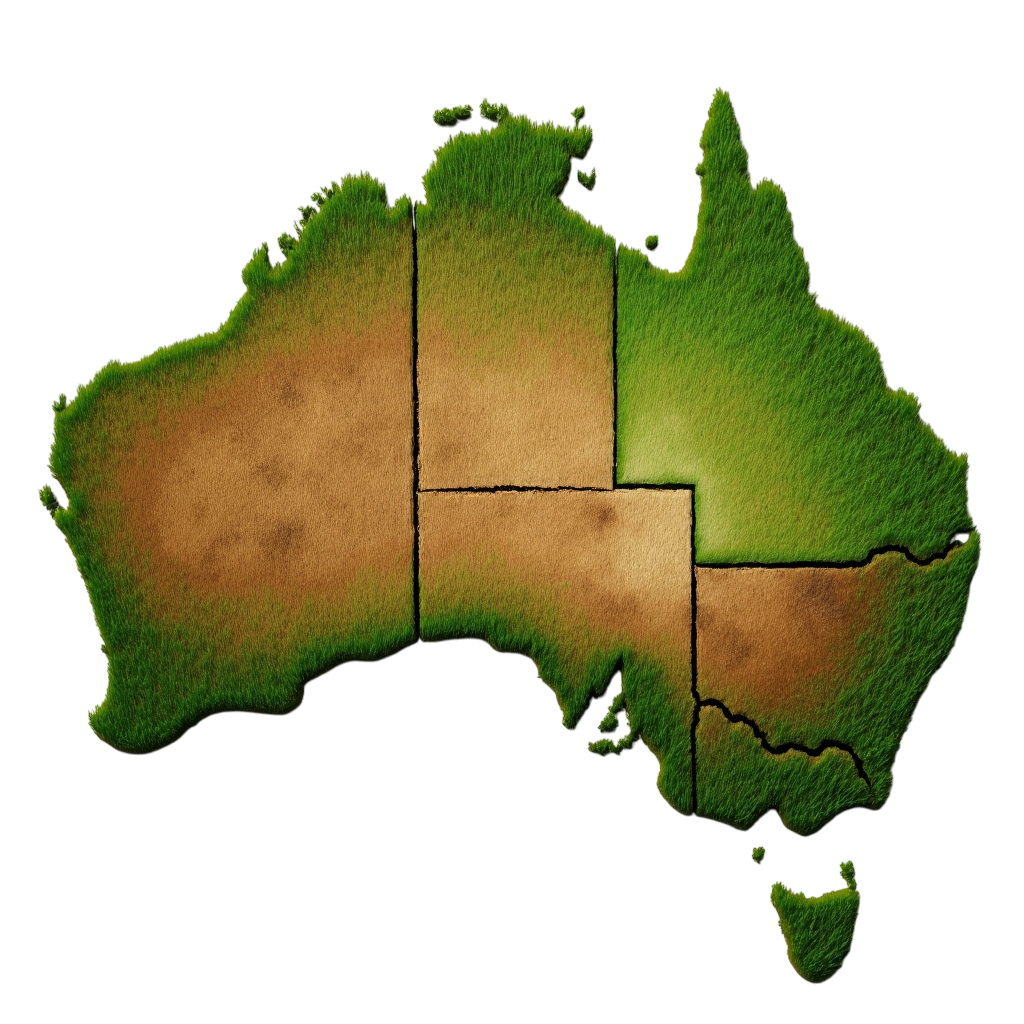
The best time to fertilise your lawn is when it has the growing conditions and nutrients it needs to actively grow.
For many Australian lawns, this means fertilising more frequently through the warmer months and reducing the frequency as temperatures cool.
But there is no single fertilising calendar that works for every lawn.
A kikuyu lawn in Brisbane can have a very different growing season from a couch lawn in Melbourne. A buffalo lawn may slow down considerably through winter, while a cool-season grass such as ryegrass can remain actively growing in cooler conditions.
Your grass variety, climate, soil, moisture and fertiliser type all influence when and how often you should fertilise.
This guide explains when to fertilise your lawn in Australia, what changes between spring, summer, autumn and winter, and how to build a practical fertilising program.
So, when is the best time to fertilise your lawn?
For most warm-season Australian lawns, the main fertilising period is spring through summer and into autumn, when temperatures support active growth. This includes common turf varieties such as:
- Couch
- Kikuyu
- Buffalo
- Zoysia
As temperatures rise, these grasses generally become more active and produce more new growth. However, the calendar should be treated as a guide rather than a rule. Your lawn's growth is a better indicator than the date. If your grass is actively growing, regularly producing new leaf growth and recovering well after mowing, it is using nutrients. If growth has slowed considerably because of cold, drought or other environmental stress, your fertilising program may need to change.
What are the signs that your lawn is actively growing? |
These signs can help you decide when to increase or reduce your fertilising frequency. |
When to Fertilise Your Lawn in Spring
Spring is when many Australian warm-season lawns begin moving out of their slower winter period. As temperatures rise, couch, kikuyu, buffalo and zoysia can begin producing more active growth. This is generally when fertilising becomes more important. However, there is no need to fertilise simply because the calendar has reached September. If your lawn is still slow-growing because temperatures are low, wait until conditions are suitable.
Once active growth has started, a regular fertilising program can help provide the nutrients required for new leaf and root growth.
What fertiliser should you use in spring?
The answer depends on your lawn and what you are trying to achieve. A balanced liquid fertiliser such as Activ8Mate 8-1-4 can be incorporated into a regular lawn nutrition program. For lawns requiring higher nitrogen input during vigorous growth, Activ8EXTRA 16-2-5 provides a higher nitrogen analysis alongside phosphorus, potassium and trace elements. The important point is to match the fertiliser and application rate to the lawn rather than assuming more nitrogen is always better.
When to Fertilise Your Lawn in Summer
Summer is often the period of strongest growth for warm-season turf. Couch, kikuyu, buffalo and zoysia can all be actively growing during summer, although their growth rates and nutritional requirements differ. This makes summer an important part of the lawn fertilising calendar. However, Australian summer conditions can also create another problem: heat and moisture stress. If the lawn is severely drought-stressed or the soil is too dry, adding more fertiliser isn't necessarily going to solve the problem. Before increasing fertiliser applications, consider whether the lawn has adequate:
- Soil moisture
- Sunlight
- Drainage
- Root-zone conditions
- Water penetration
Once growing conditions are suitable, continue fertilising according to your lawn-care program and the product directions.
Liquid fertiliser in summer
Our general application approach is to use liquid products more frequently during hotter, drier periods, with applications reduced as conditions become cooler and wetter. For products such as Activ8EXTRA, the manufacturer's current guidance recommends applications every 2–4 weeks during the active growing season, with less frequent or lower-strength applications during cooler periods
When to Fertilise Your Lawn in Autumn
Autumn is a transition period for Australian lawns. Warm-season grasses can remain actively growing well into autumn, particularly in warmer parts of the country. In cooler regions, growth will slow sooner as temperatures fall. This means autumn is not automatically the time to stop fertilising. Instead, monitor the lawn. If your couch, kikuyu, buffalo or zoysia is still growing actively, it can continue to benefit from appropriate nutrition. As growth slows, reduce the frequency of applications. Autumn can also be an important time to prepare the lawn for the cooler months ahead. Australian lawn guidance commonly recommends autumn feeding for warm-season turf before winter dormancy or slower growth.
Should You Fertilise Your Lawn in Winter?
Winter fertilising depends on your lawn and where you live.
This is particularly important in Australia because winter conditions vary significantly between regions. In colder areas, warm-season grasses can become dormant or slow down considerably. In warmer parts of Australia, including much of Queensland, warm-season turf can continue growing through winter, although growth may be slower.
So rather than treating winter as a complete stop to lawn fertilising, it can be more useful to reduce your fertilising frequency to match the slower conditions.
Plant Doctor's winter approach
We recommend continuing a reduced liquid fertilising program through the cooler months. As a general guide:
- Hotter/drier months: approximately fortnightly
- Cooler/wetter months: approximately monthly
This approach is reflected in our application guide, which recommends moving from fortnightly applications in hotter and drier conditions to monthly applications during cooler and wetter periods. Our lawn-care products are therefore not designed around the assumption that every Australian lawn becomes completely dormant in winter. You shoudl also note that many Australian regions do not become cold enough for lawns and soils to become completely dormant.
What about CHAMPION in winter?
CHAMPION Lawn & Fairway 15-3-9 is a slow-release granular fertiliser and works differently from liquid fertilisers. Rather than applying it every few weeks, we recommend CHAMPION every 3 months as part of a longer-term lawn nutrition program. This means you can maintain a consistent granular fertiliser base while adjusting your liquid applications according to the season.
How often should you fertilise your lawn?
There is no universal fertilising schedule for every Australian lawn. The right frequency depends on:
- Grass variety
- Climate
- Season
- Growth rate
- Soil condition
- Moisture availability
- Nutrient requirements
- Fertiliser formulation
- Previous applications
The type of fertiliser you use is particularly important. A slow-release granular fertiliser is not applied on the same schedule as a liquid fertiliser. A simple Plant Doctor approach. For a general lawn-care program, we recommend:
| Fertiliser type | General frequency |
|---|---|
| Liquid fertilisers | More frequently during active growth, reduced to approximately monthly during cooler months |
| CHAMPION 15-3-9 | Every 3 months |
| Liquid Iron | As required according to lawn condition and product directions |
| Seaweed and biostimulants | According to the individual product and lawn-care program |
This gives you a useful framework without turning lawn fertilising into a rigid calendar. The lawn itself should still determine when adjustments are needed.
CHAMPION vs Liquid Lawn Fertiliser
One of the easiest ways to build a consistent lawn fertilising program is to understand the difference between granular and liquid fertilisers.
- CHAMPION Lawn & Fairway 15-3-9 is a granular lawn and fairway fertiliser designed for longer-term nutrient availability. We recommend applying it every 3 months, making it a practical option for establishing a longer-term fertilising base. The 2–4 mm granules are applied across the lawn and watered in immediately according to the product directions.
-
Liquid fertilisers can be incorporated into a more regular lawn-care routine. Our liquid products can be applied approximately fortnightly during hotter, drier periods and reduced to around monthly during cooler, wetter conditions, with the exact frequency depending on the product and circumstances. This gives lawn owners the flexibility to adjust nutrition as growing conditions change.
Do you have to choose one or the other? Not necessarily. A lawn program can combine a longer-term granular fertiliser such as CHAMPION with liquid products used throughout the year according to the lawn's requirements. The important thing is to consider the total fertiliser program rather than treating each product as a completely separate routine.
When to Fertilise Different Types of Australian Lawn
Different turf varieties have different growth patterns, so the ideal fertilising period isn't exactly the same for every lawn.
| Grass type | General growing and fertilising period |
|---|---|
| Couch | Spring through autumn, while actively growing |
| Kikuyu | Spring through autumn, with a longer active season in warmer climates |
| Buffalo | Spring through autumn, depending on climate |
| Zoysia | Warmer months, with growth generally slower than vigorous kikuyu or couch |
| Cool-season grasses | Cooler growing periods, depending on species and location |
These are broad Australian guidelines rather than fixed dates. For example, couch, kikuyu and buffalo can brown off during cold conditions and recover when warmer weather returns in frost-prone areas. At the other end of the country, a warm-season lawn in a subtropical or tropical climate may continue growing through much of winter. This is why climate matters just as much as the grass variety.
Should You Fertilise a Yellow Lawn?
Not necessarily. Yellow grass is often interpreted as a sign that the lawn needs fertiliser, but colour alone doesn't tell you what is wrong. Yellowing can be associated with:
- Nitrogen deficiency
- Iron deficiency
- Water stress
- Poor drainage
- Compacted soil
- Insufficient sunlight
- Pests
- Disease
- Seasonal slowdown or dormancy
Adding more nitrogen without identifying the cause can therefore be the wrong approach.
Nitrogen deficiency vs iron deficiency: Nitrogen is an essential nutrient for leaf growth and chlorophyll production, so insufficient nitrogen can contribute to pale or yellow turf. Iron is also involved in chlorophyll production. Where iron availability is limiting, applying an appropriate iron product can improve turf colour without adding a large amount of nitrogen. Plant Doctor Liquid Iron provides iron and sulphur and can be incorporated into a lawn program where additional iron is appropriate.
The important lesson is simple: Don't fertilise a symptom. Diagnose the problem first.
Does Soil Condition Affect Lawn Fertilising?
Yes. Fertiliser provides nutrients, but the condition of the soil affects how effectively the lawn can access water and nutrients. Compaction, poor drainage, uneven water penetration and unsuitable soil conditions can all contribute to poor lawn performance. If a lawn isn't responding to fertiliser as expected, applying more isn't always the answer. Look at the whole growing environment.
If water is running off the surface or certain areas repeatedly dry out, the problem may be related to water penetration or distribution. A soil wetting agent such as Nature's Soil Wetter can be useful where water-repellent soil is contributing to poor wetting. Other soil issues may require a different approach, such as:
- Soil testing
- Aeration
- Addressing compaction
- Correcting pH where necessary
- Improving drainage
- Managing organic matter
- Adjusting nutrient applications
Fertiliser works best as part of a broader lawn management program.
What About Seaweed and Biostimulants?
Not every lawn product is a fertiliser, and this distinction matters. Products such as seaweed extracts and biostimulants are used for purposes that differ from supplying the primary nutrients in an NPK fertiliser. Seaweed Secrets, for example, is a concentrated seaweed-based product that can be incorporated into a regular lawn-care program alongside fertiliser. It should complement your lawn nutrition program rather than being treated as a replacement for a complete fertiliser where nutrients are required. Likewise, products such as soil wetting agents have a specific role in managing water movement through soil. The best lawn program isn't necessarily the one with the most products. It is the one where each product has a reason for being there.
How to Build a Lawn Fertilising Schedule
Rather than choosing a fertiliser schedule based purely on the calendar, start with five questions:
1. What grass do you have? Couch, kikuyu, buffalo, zoysia and cool-season grasses don't all grow at the same time or at the same rate.
2. Where are you located? Australian growing seasons vary considerably from tropical and subtropical Queensland to cooler southern regions.
3. Is the lawn actively growing? Look at mowing frequency, new growth and recovery.
4. What fertiliser are you using? Liquid and granular fertilisers have different application intervals.
5. Does the lawn actually need the nutrients? If you're dealing with yellowing, poor growth or patchiness, investigate the cause before simply increasing fertiliser.
A Simple Year-Round Lawn Fertilising Program
For many Australian warm-season lawns, a practical starting point looks like this:
- Spring: As temperatures rise and active growth begins, increase fertilising frequency. This is the time to transition from the reduced winter program towards your regular active-growth routine.
- Summer: Maintain regular nutrition while the lawn is actively growing and has adequate moisture. Liquid fertilisers can be applied more frequently during strong growth, following the individual product directions.
- Autumn: Continue feeding while the lawn remains actively growing. As temperatures fall and growth slows, reduce the frequency.
- Winter: Maintain a reduced lawn nutrition program rather than automatically stopping altogether. For Plant Doctor liquid products, this generally means approximately once per month during cooler months. CHAMPION is applied every 3 months, providing a longer-term granular fertiliser component to the program.
| Frequently Asked Questions | |
|---|---|
| When is the best time to fertilise a lawn in Australia? | The best time is generally when the lawn is actively growing and conditions are suitable for nutrient uptake. For many warm-season lawns, this means spring through summer and into autumn, with reduced applications during cooler periods. |
| Can I fertilise my lawn in winter? | Yes, depending on your grass and climate. Plant Doctor recommends reducing liquid fertiliser applications to approximately monthly during cooler months rather than automatically stopping. Some warm-season lawns will slow significantly or become dormant in colder areas, while lawns in warmer regions can continue growing through winter. |
| How often should I fertilise my lawn? | It depends on the product and your lawn's growing conditions. Plant Doctor generally recommends more frequent liquid applications during active growth, reducing to approximately monthly during cooler months. CHAMPION is applied every 3 months. |
| When should I fertilise kikuyu? | Kikuyu is a warm-season grass and is generally fertilised throughout its active growing period. In warmer Australian climates, this can extend well into autumn and winter. |
| When should I fertilise couch? | Couch is a warm-season grass and is generally fertilised while actively growing through the warmer months. In colder areas, growth can slow or stop during winter. |
| When should I fertilise buffalo grass? | Buffalo is a warm-season grass and is generally fertilised during active growth. Its growing season will vary according to local climate and winter temperatures. |
| Can I use fertiliser in hot weather? | You can fertilise during summer when the lawn is actively growing, but severe heat or drought stress should be addressed first. Make sure the lawn has adequate moisture and follow the product's application directions. |
| Is liquid or granular fertiliser better for lawns? | They serve different purposes. Liquid fertilisers can be incorporated into a more regular lawn-care program, while slow-release granular fertilisers can provide longer-term nutrition between applications. Plant Doctor's program can incorporate both. |
| How often should I apply CHAMPION? | Plant Doctor recommends applying CHAMPION Lawn & Fairway 15-3-9 every 3 months as part of a longer-term lawn fertilising program. |
| Should I fertilise a yellow lawn? | Not automatically. Yellowing can be caused by nutrient deficiencies, water stress, compaction, pests, disease, insufficient sunlight and other factors. Identify the likely cause before increasing fertiliser applications |
The Best Time to Fertilise Is When Your Lawn Needs It
There isn't one perfect fertilising date for every Australian lawn. The most useful approach is to look at your grass variety, local climate, current growth and the fertiliser you're using. For many warm-season lawns, fertilising increases through spring and summer, continues through autumn while growth remains active, and then reduces during winter.
A practical Plant Doctor program can use liquid fertilisers approximately monthly through the cooler months and more frequently during stronger growth, while CHAMPION 15-3-9 is applied every 3 months for longer-term granular nutrition. Most importantly, don't confuse a fertilising schedule with a lawn diagnosis. If the lawn is yellow, patchy or struggling, work out why before simply adding more fertiliser.
The goal isn't maximum fertiliser. It's appropriate nutrition, applied at the right time and at the right rate for the lawn.
Want to make it easier to keep track? Use our Application Calendar to build your own personalised schedule based on the Plant Doctor products you're using, so you can see what to apply and when throughout the year.
Products in this article
Activ8EXTRA High Nitrogen Liquid Lawn Fertiliser & Plant Growth Booster
Activ8mate Liquid Fertiliser Inoculant - For use on Plants, Lawns, Veggies, Trees, Natives
CHAMPION Lawn & Fairway - Slow release granular fertiliser
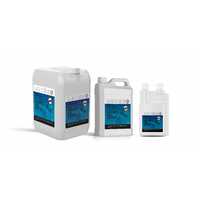
Nature's Soil Wetter - Liquid Soil Conditioner & Wetting Agent
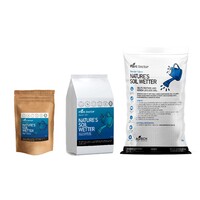
Nature's Soil Wetter granules - Natural mineral infused with plant-derived non-petrochemical surfactant
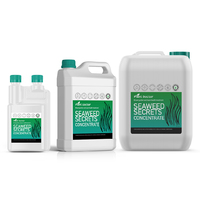
Seaweed Secrets | Concentrated Liquid Seaweed (Kelp) | Super-Boosted with Humic & Fulvic Acid

Leave a comment