
Why Heat-Stressed Lawns Turn Brown (And How to Prevent It)
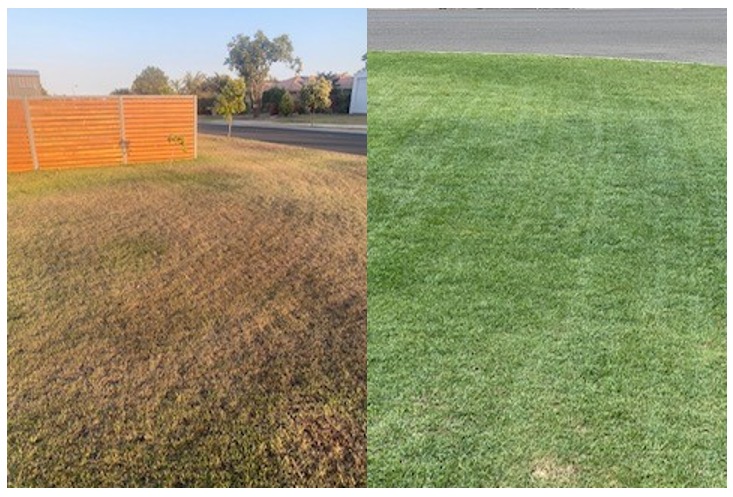 During summer, lawns can lose colour, thin out or develop brown patches surprisingly quickly. While this can make it look like your lawn is dying, heat and water stress can cause temporary changes in grass colour and growth.
However, severe or prolonged heat and moisture stress can cause permanent damage, particularly when the grass cannot replace the water it loses. Understanding what causes heat stress and how to prepare your lawn can help it cope better with hot Australian weather.
What Is Heat Stress in Grass?
Heat stress occurs when high temperatures and other environmental conditions place more demand on a grass plant than it can comfortably manage. On hot days, grass loses water through transpiration, while moisture is also lost from the soil through evaporation. When water is being lost faster than the roots can replace it, the plant becomes stressed.
Heat can also affect root function, photosynthesis and overall growth. If conditions remain stressful, some grasses may enter dormancy to conserve resources.
You may notice:
- Grass changing from green to yellow or brown
- Wilting or flattened leaves
- Thin or patchy areas
- Slower growth
- Slower recovery after mowing
- Footprints remaining visible in the lawn
- Dry or brittle grass blades
Brown grass doesn't always mean the lawn is dead. Some warm-season grasses can recover when temperatures moderate and adequate moisture becomes available. However, prolonged stress can kill grass, particularly if the root system is already compromised.
Why Does Heat Stress Affect Your Lawn?
Several factors can make a lawn more vulnerable during hot weather.
| Water Loss | Higher temperatures increase evaporative demand. If the soil doesn't contain enough available moisture, grass can struggle to replace the water lost through its leaves. |
| Shallow Roots | A lawn with a shallow or poorly developed root system has less access to moisture deeper in the soil. This can make it more vulnerable during hot, dry periods. |
| Compacted Soil | Compacted soil can restrict root growth and interfere with the movement of air and water through the soil. This can make it harder for turf to access the resources it needs during stressful conditions. |
| Poor Soil Moisture | Some soils can become difficult to wet evenly, particularly when they develop water repellency. Water may run off or move through preferential pathways instead of spreading evenly through the root zone. |
| Mowing Stress | Removing too much leaf material can place additional stress on grass during hot weather. The appropriate mowing height varies between turf varieties, but maintaining sufficient leaf area can help support the plant during periods of environmental stress. |
| Grass Variety | Not all grasses respond to heat in the same way. Warm-season turf varieties such as couch, kikuyu, buffalo and zoysia are generally better adapted to Australia's warmer conditions than cool-season grasses. However, heat, drought and shade tolerance can vary significantly between species and cultivars. |
How to Prevent Heat Stress in Your Lawn
The best approach to summer lawn care is to prepare the lawn before extreme conditions arrive.
1. Water According to Conditions
Water is one of the most important factors in helping turf cope with hot weather. Rather than following a fixed watering amount throughout summer, adjust your irrigation according to your grass variety, soil type, rainfall, temperature and local water restrictions.
When watering is required, aim to wet the root zone rather than providing frequent, shallow watering. Early morning is generally a good time to water because it allows moisture to reach the root zone before the hottest part of the day while giving grass foliage time to dry.
If water is running off the surface instead of soaking into the soil, investigate whether compaction or water repellency is affecting infiltration.
2. Improve Your Soil
A lawn's ability to cope with heat starts below the surface. Healthy soil provides the environment roots need to access water, air and nutrients. If your soil is compacted, poorly structured or difficult to wet, improving the soil can be an important part of your lawn care routine. Aeration can help where genuine compaction is present, but it isn't something every lawn automatically needs once or twice a year. Assess the condition of the soil first.
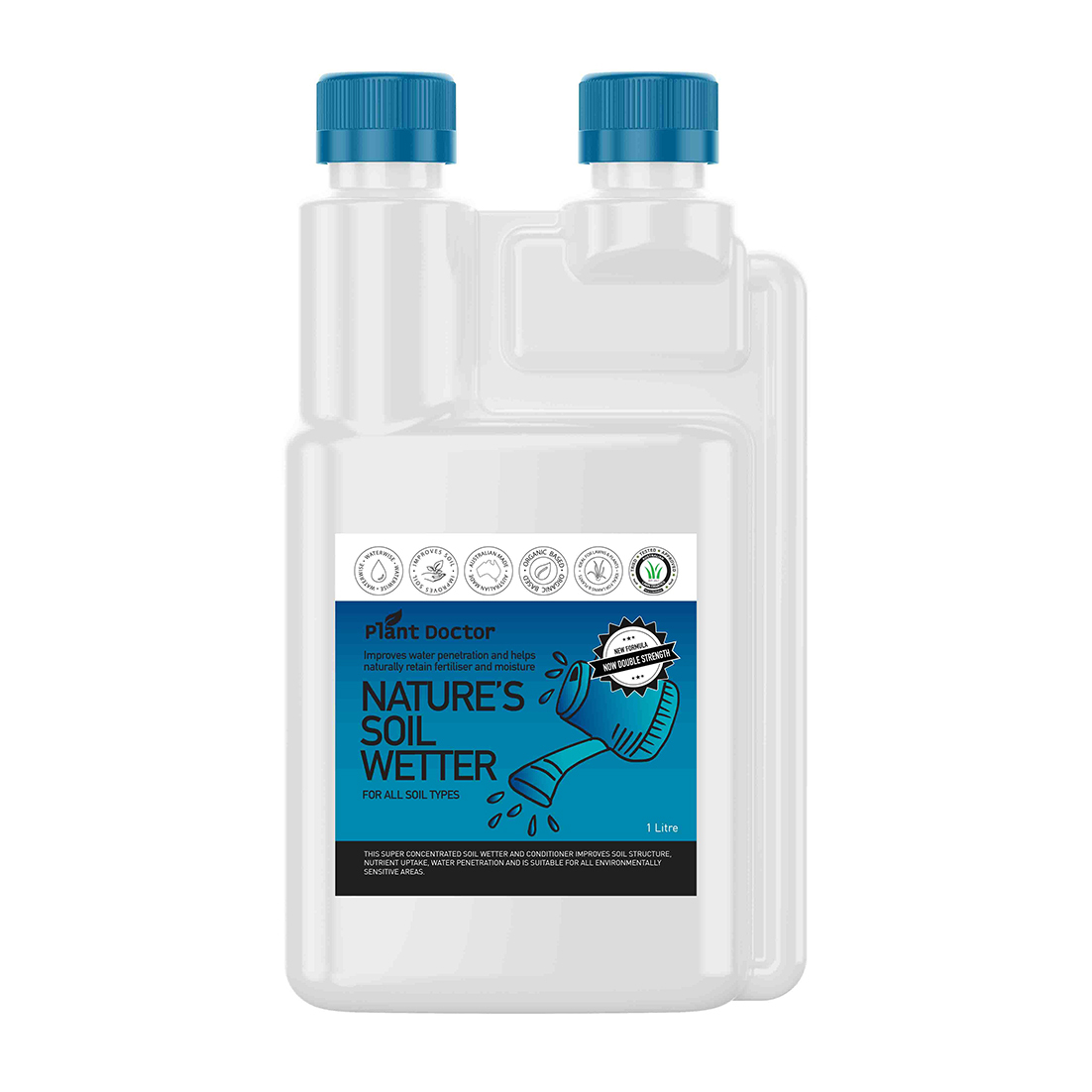
For soils affected by water repellency, a wetting agent can help water penetrate and distribute more evenly through the soil. Plant Doctor Nature's Soil Wetter can be incorporated into a lawn and soil care routine where improving water penetration is required.
3. Maintain Appropriate Mowing
Mowing practices can have a significant effect on how your lawn handles summer conditions. Avoid removing excessive amounts of leaf in a single mow, particularly when the lawn is already under heat or drought stress.
Rather than applying one mowing height to every lawn, follow the recommended height for your particular turf variety. Maintaining an appropriate amount of leaf area allows the plant to continue photosynthesising while providing some protection for the soil surface.
Keep mower blades sharp too. Blunt blades can tear grass leaves rather than making a clean cut.
4. Feed Your Lawn When It Is Actively Growing
Good nutrition supports healthy turf, but fertiliser isn't a cure for heat stress. If your lawn is actively growing and requires additional nutrients, a suitable fertiliser can form part of your summer lawn care routine.
Plant Doctor Activ8EXTRA provides nitrogen, phosphorus, potassium and trace elements, along with seaweed, fish, blood and bone, humic and fulvic substances. The important thing is to fertilise according to the product directions and the needs of your lawn. Avoid heavy applications simply because the weather is hot or the lawn has lost colour.
If your grass is severely heat or drought stressed, address moisture and environmental stress first.
5. Support the Soil and Plant
Summer lawn care isn't just about keeping the grass green. Maintaining healthy soil and supporting the plant throughout periods of active growth can form part of a consistent lawn care routine.
Plant Doctor Seaweed Secrets contains seaweed-derived minerals and amino acids along with humic and fulvic substances. It can be used as part of a broader lawn and soil care program.
It shouldn't be viewed as a replacement for water or fertiliser, but rather as one component of an overall approach to lawn care.
 Can Wetting Agents Help a Heat-Stressed Lawn?
Wetting agents can be particularly useful when soil has become water repellent.
A water-repellent soil may cause water to bead on the surface, run off or move unevenly through the root zone. This means that even when you are watering, parts of the root zone may not be receiving moisture evenly.
A product such as Nature's Soil Wetter can help water penetrate and distribute more evenly through affected soil.
However, a wetting agent isn't a substitute for irrigation. If the soil is genuinely dry, the lawn still needs an appropriate supply of water.
What to Do If Your Lawn Is Already Heat Stressed
If your lawn has already turned brown or yellow, don't immediately assume that it needs more fertiliser. Start by checking the soil moisture and looking at the overall condition of the lawn. If the soil is dry, restore moisture gradually. If water is running off dry or compacted soil, apply it in shorter cycles to give it time to soak in rather than simply increasing the volume of water. Avoid aggressive mowing while the lawn is under significant stress.
Once conditions improve, give the lawn time to recover. Warm-season grasses can often resume growth when adequate moisture and suitable temperatures return. If areas remain bare after the stress has passed, the appropriate solution will depend on the turf variety. Some lawns may recover naturally, while others may require repair, reseeding or replacement.
 When Brown Grass Isn't Heat Stress
It's important not to assume every brown or yellow lawn is suffering from heat. Similar symptoms can be caused by:
- Nutrient deficiencies
- Overwatering
- Poor drainage
- Compacted soil
- Lawn pests
- Turf diseases
- Chemical damage
- Animal urine
- Insufficient sunlight
- Incorrect mowing
- Seasonal dormancy
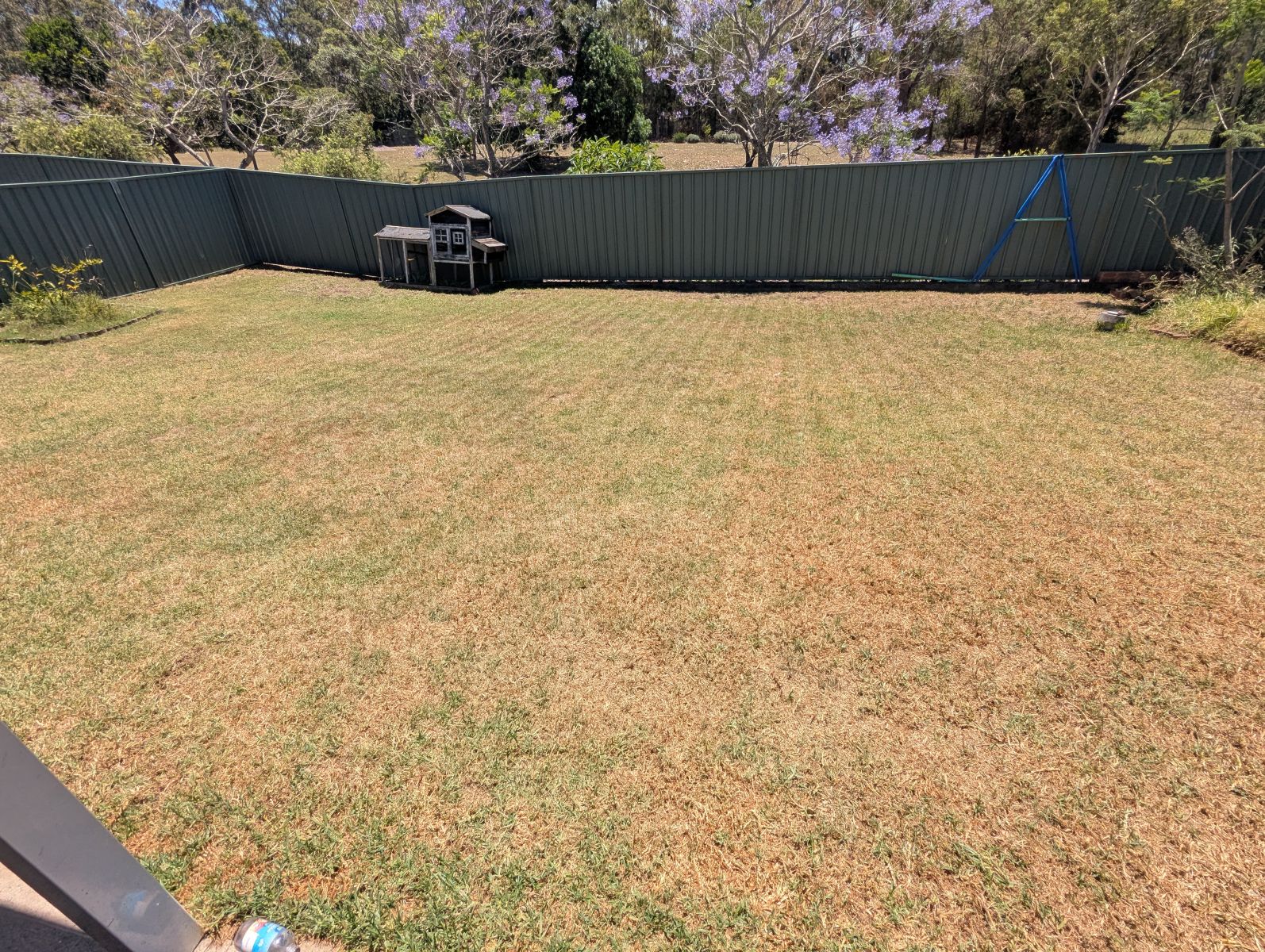
Look at the pattern of the damage as well as recent weather conditions. For example, widespread browning during a prolonged hot and dry period may be consistent with environmental stress, while small, sharply defined patches or rapidly spreading areas may indicate another problem. Identifying the cause before applying a treatment can save you time, money and unnecessary applications.
Build a Lawn That Can Handle Summer
You can't control the weather, but you can improve how prepared your lawn is for it. A summer lawn care routine should focus on the fundamentals: appropriate watering, suitable mowing, healthy soil and balanced nutrition. Products such as Nature's Soil Wetter, Activ8EXTRA and Seaweed Secrets can form part of that broader routine when they are suited to the conditions your lawn is experiencing. Most importantly, don't chase colour alone. A lawn that has healthy roots, suitable soil conditions and consistent care is better positioned to cope with the challenges of an Australian summer.
Think routine, not more. Give your lawn what it needs, when it needs it, and adjust your approach as conditions change.
Products in this article

Activ8EXTRA High Nitrogen Liquid Lawn Fertiliser & Plant Growth Booster

Nature's Soil Wetter - Liquid Soil Conditioner & Wetting Agent

Nature's Soil Wetter granules - Natural mineral infused with plant-derived non-petrochemical surfactant

Seaweed Secrets | Concentrated Liquid Seaweed (Kelp) | Super-Boosted with Humic & Fulvic Acid

Leave a comment