
Why Your Soil Needs a Boost Before Winter: The Power of Humic Acid
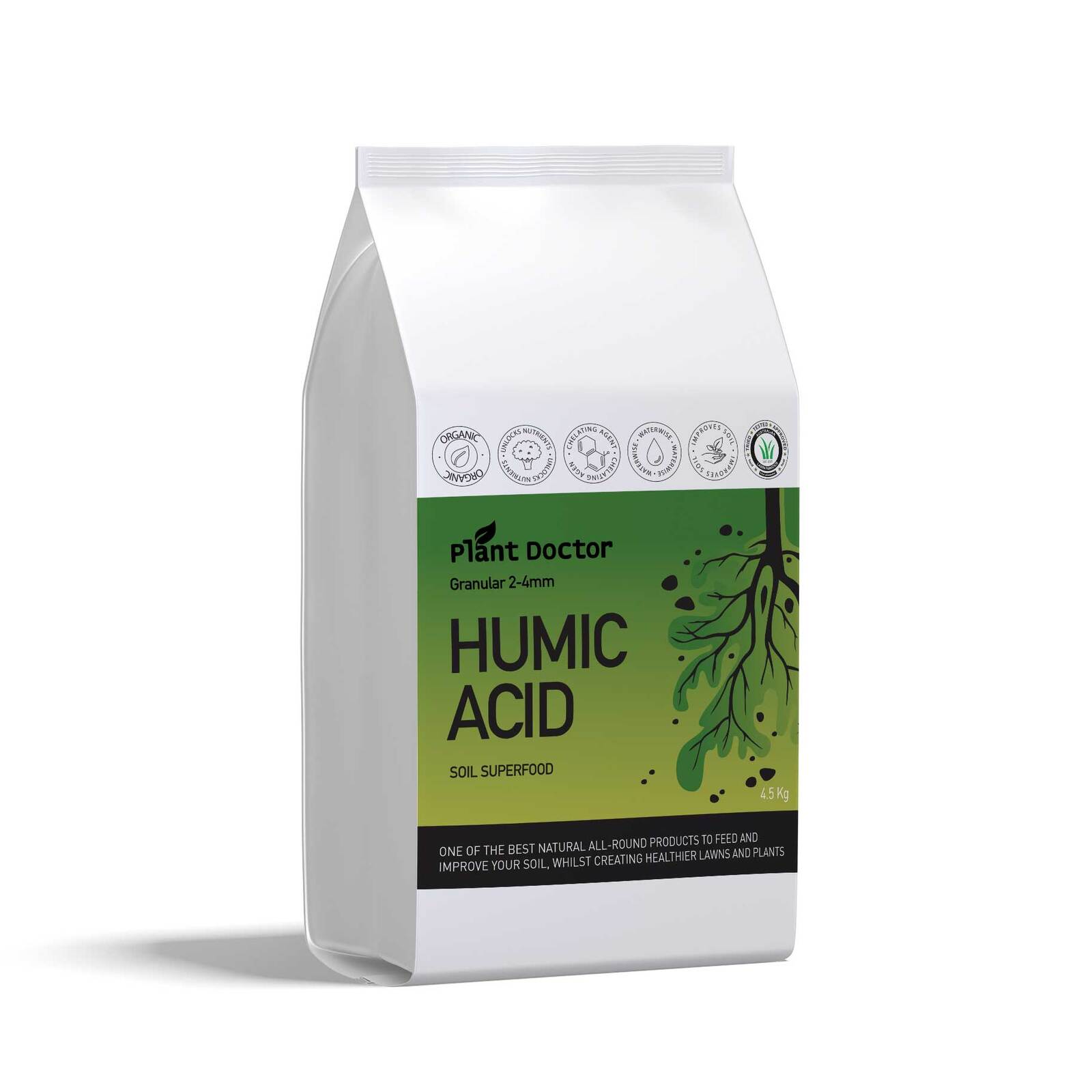 As autumn settles in across Australia, it's easy to focus on what is happening above the ground. Lawns are growing more slowly, summer vegetables are finishing up and many gardens are preparing for cooler weather.
But there is still plenty happening beneath the surface.
Soil remains an important part of plant health throughout the cooler months, and autumn can be a useful time to assess soil condition and prepare for the months ahead.
One of the tools used in soil management is humic acid. Humic substances occur naturally in soil and organic matter and can interact with soil minerals, nutrients and plant roots. Research has found that applications of humic substances can influence soil properties and plant growth, although the results vary depending on the source, application rate, soil, plant and growing conditions.
So what exactly is humic acid, and where does it fit into a healthy soil program?
What Is Humic Acid?
Humic acid is one component of a broader group of naturally occurring substances known as humic substances. These substances develop as plant, animal and microbial residues are transformed and decomposed over time. They occur naturally in soils and can also be obtained from materials such as compost, peat and lignite.
Humic substances can interact with minerals, nutrients and organic matter in the soil. Their properties mean they are commonly used as soil amendments and biostimulants. Rather than thinking of humic acid as a fertiliser replacement, it is more useful to think of it as one part of a broader soil-management program. Humic substances can interact with nutrients, influence soil physical and chemical properties and, under some conditions, support plant growth and root development. Research has found positive plant-growth responses to humic substances, but those responses are not consistent in every situation.
Why Autumn Can Be a Good Time to Look After Your Soil
There is no single autumn application window that applies to every Australian garden. Australia has a wide range of climates, from tropical and subtropical regions to temperate and Mediterranean climates. Soil temperature, rainfall, plant growth and winter conditions can vary considerably between regions.
However, autumn can be a useful time to assess soil before the cooler months because:
- Soil conditions are changing: As temperatures fall, plant growth and soil biological activity may slow, depending on your climate. Preparing the soil while conditions are still suitable for active plant and root growth can help establish a stronger foundation for the months ahead.
- Root growth doesn't necessarily stop: Many plants continue developing roots outside periods of peak shoot growth. Maintaining suitable soil conditions can therefore remain important even when above-ground growth slows.
- Cooler weather changes water requirements: As temperatures fall, evaporation and plant water demand can change. Soil condition still matters because both excessive water retention and poor infiltration can create problems depending on the soil and climate.
- It can be a useful time for soil maintenance: Autumn provides an opportunity to assess compaction, organic matter, drainage, nutrient availability and soil pH before the growing conditions of spring return.
7 Potential Benefits of Humic Substances
The benefits of humic substances depend on the product, soil, plant and application method. Research suggests several areas where they may contribute to soil and plant management.
1. Supporting Soil Structure
Humic substances can interact with soil minerals and organic matter and may contribute to soil aggregation. Better aggregation can influence pore space, aeration and water movement through the soil. However, humic acid is not a cure for severe compaction. If a lawn is compacted, physical aeration and improved drainage may still be required.
2. Supporting Nutrient Availability
Humic substances have chemical properties that allow them to interact with nutrients and mineral surfaces. They can contribute to the soil's capacity to retain and exchange certain nutrients, including through effects on cation exchange processes. The practical benefit depends on the soil and the nutrients involved. Humic acid should therefore be viewed as a complement to good fertiliser and soil-management practices rather than a replacement for them.
3. Supporting Water Management
Humic substances can influence soil physical properties and water relationships, particularly when incorporated into an overall soil-management program. The effect is not the same in every soil, however. Sandy soils, clay soils and soils with different levels of organic matter can respond differently. Good drainage remains essential. Humic acid should not be considered a replacement for fixing a poorly drained site.
4. Supporting Root Development
Research has found that humic substances can influence root architecture and plant growth. A large review and meta-analysis found average increases in shoot and root dry weight following humic substance applications, although the response varied substantially according to the source of the humic material, application rate, plant and growing conditions. This is one reason humic substances are commonly included in soil and plant biostimulant programs.
5. Supporting Soil Biological Activity
Humic substances interact with the biological and chemical components of soil. Research suggests they can influence microbial activity and interactions between plants and soil microorganisms, although the effect depends on the characteristics of the humic material and the soil environment. Humic acid should not be thought of as simply a food source for beneficial microbes. Maintaining organic matter, plant residues and suitable soil conditions is also important for a diverse soil microbial community.
6. Supporting Nutrient Use Efficiency
Humic substances are being investigated for their potential to improve nutrient-use efficiency and interactions between fertilisers and soil. Some research suggests they can act as synergists alongside fertilisers, but the response varies between products and growing conditions. This means humic acid works best as part of a complete nutrient-management program rather than as a substitute for fertiliser.
7. Long-Term Soil Management
Humic substances can form part of a broader soil-health strategy alongside practices such as maintaining organic matter, reducing unnecessary compaction, managing pH, improving drainage and applying nutrients according to plant requirements. They are not a quick fix for every soil problem, but they can be one useful tool in a long-term approach to soil management.
Humic Acid and Soil pH
Humic substances can interact with minerals and influence chemical processes in soil, but they should not be treated as a universal pH correction. If your soil is too acidic or alkaline, start by testing the soil and identifying the cause. Different soil amendments are used for different pH problems. For example, lime is commonly used to raise soil pH in acidic soils, while other management approaches may be appropriate for alkaline soils. Humic acid can form part of a soil-health program, but it shouldn't replace proper soil testing and pH management.
Powdered vs Granular Humic Acid: Which Should You Use?
Humic products are available in different formulations, including powders, granules and liquids. The best choice depends on the product formulation, concentration and intended application.
| Format | Common applications | Key consideration |
|---|---|---|
| Powdered Humic Acid | Soil blending, mixing with compatible inputs and applications where a soluble product is required | Easy to incorporate into suitable liquid or soil applications when the product directions allow |
| Granular Humic Acid | Lawns, garden beds, tree surrounds and broader soil applications | Convenient for spreading across larger areas |
The formulation does not automatically determine how quickly a product works. Application rate, solubility, humic content, soil conditions and the specific product formulation all influence performance.
Always follow the application directions for the product you are using.
| Frequently Asked Questions | |
|---|---|
| Is humic acid safe for all plants? |
Humic products are used across lawns, gardens, horticulture and agriculture, but there is no single application rate that is appropriate for every plant or product. Always check the product label and directions before applying. For edible gardens, use products according to their stated directions and intended use. |
| Can I use humic acid with fertiliser? |
Humic substances are commonly used alongside fertilisers and have been investigated for their potential to improve nutrient-use efficiency. However, compatibility depends on the specific products being mixed. If you are combining products, follow the manufacturer's directions and check compatibility before mixing unfamiliar inputs. |
| How often should I apply humic acid? |
There is no universal application schedule. The appropriate frequency depends on the product formulation, concentration, soil, plant and application method. Rather than applying humic acid simply because it is autumn, assess the condition of your soil and follow the application instructions for the specific product you are using. |
| Does humic acid replace fertiliser? |
No. Humic acid and fertiliser perform different roles. Fertilisers provide nutrients required for plant growth, while humic substances are used to support soil and plant processes. A healthy soil program may include both, depending on the needs of the soil and plants. |
| Is humic acid the same as organic matter? |
No. Humic substances are components of soil organic matter, but adding a humic product is not the same as adding compost or other organic material. Compost and other organic amendments can contribute carbon, nutrients and physical material to soil, while humic products provide concentrated humic substances. Both can have a place in a broader soil-management program. |
Give Your Soil a Head Start Before Winter
Healthy plants start with a healthy growing environment, and soil management is an important part of maintaining that environment throughout the year. Autumn is a good time to look beyond the surface and assess what is happening in your soil. Check for compaction. Test your soil if you're unsure about pH or nutrient availability. Maintain organic matter. Manage drainage. Apply fertiliser according to plant requirements. And where appropriate, consider humic substances as part of your soil-management program. Humic acid isn't a magic fix, and it doesn't replace good soil management. But research indicates that humic substances can influence soil properties, nutrient interactions, root development and plant growth, with results depending on the product and growing conditions. For Australian lawns, gardens, orchards and growing areas, Plant Doctor offers humic products in different formulations to suit different application methods and soil-management programs. Choose the product that suits your soil and application method, follow the product directions, and give your soil the attention it needs before the next growing season.
Products in this article
Humate / Humic Acid (45-50%) Granules (2-4mm) - Cert. Organic
Plant Doctor Humic acid 80% (Humate) Powder - 99% Soluble

Quantum H - Humic Acid Soil Conditioner for Lawns & Gardens

Leave a comment